Welcome to the Family History Social

The very latest news from the world of genealogy

Categories

Cornwall's Edwardian Homes and Families Revealed in Historic Property Records

What did your Cornish ancestor's home look like before the First World War? A new collection of historic property records from TheGenealogist could help answer that question.

TheGenealogist has expanded its Lloyd George Domesday Survey collection with records covering Cornwall, offering a detailed picture of the county during the Edwardian period.

Created following the Finance Act 1910, the survey recorded property owners and occupiers, together with information about land, buildings and their valuations.

From the busy streets of Cornish towns to fishing villages, farms and former mining communities, the records reveal the properties and landscapes familiar to families living in the county more than a century ago.

Unlike census returns, which concentrate on the people living in a household, the survey provides information about the property itself. Field Books may record a building's size, condition, value, layout and associated land or outbuildings.

The records are also linked to detailed historic Ordnance Survey maps, allowing researchers to locate individual properties and compare them with the modern landscape.

For anyone tracing Cornish ancestors or researching the history of a house, farm or business, this collection provides an interesting new source of evidence.

Leave a comment

Over 352,000 People and Organisations Revealed in Historic Devon Property Records

What did Devon look like before the First World War? A major collection of Edwardian property records from TheGenealogist allows researchers to explore homes, farms, shops and businesses across the historic county.

The Devon Lloyd George Domesday Survey contains information about more than 352,000 individuals and organisations, linked to over 2,500 square miles of historic mapping.

Created following the Finance Act 1910, the survey recorded property ownership, occupation, land use, valuations and descriptions of buildings.

Through TheGenealogist's MapExplorer™, researchers can locate individual properties on contemporary maps and follow links to the associated survey records.

One particularly fascinating example is the village of Hallsands, on the South Devon coast.

The survey captures the village before the devastating storm of January 1917, when high tides and easterly gales destroyed much of the settlement.

Among its residents was Elizabeth Ann Prettejohn, later remembered as the village's last inhabitant. She remained in a surviving cottage above the ruins for many years.

From Dartmoor farms and fishing villages to market towns and seaside resorts, these records provide a detailed view of Devon's communities in the years immediately before the war.

For researchers tracing Devon ancestry or investigating the history of a property, the collection offers a valuable connection between people, places and historic maps.


The Prettejohns house in the newly released Devon Lloyd George Domesday Survey on TheGenealogist

Leave a comment

Over 6,000 Churches Can Now Be Found Through Historic Parish Record Maps

Ever wondered exactly where your ancestors were baptised, married or buried? New mapping features from TheGenealogist make it easier to connect historic parish records with the churches where those events took place.

TheGenealogist has expanded its MapExplorer™ tool by linking parish baptisms, marriages and burials to the locations of more than 6,000 churches.

This allows researchers to explore the places associated with important events in their ancestors' lives, even where a church has since been demolished, rebuilt or altered.

The update also includes more than 3,000 historic photographs and paintings of churches, added to TheGenealogist's Image Archive.

Where available, these images are linked to the church locations on the map, allowing family historians to see what a building may have looked like in earlier times.

Another new feature allows researchers to display search results as geographical heatmaps.

These can reveal where particular surnames were concentrated, helping to identify possible family connections, regional patterns and movements between communities.

For anyone researching parish records, the combination of maps, historic images and geographical search results offers another way to explore the places associated with their ancestors.

The features are available to Diamond subscribers through TheGenealogist's MapExplorer™.

Leave a comment

New Historic Maps Reveal How Britain Changed After the Second World War

How much has your hometown changed since the 1940s? A new collection of detailed Ordnance Survey maps added to TheGenealogist's MapExplorer™ provides a fascinating opportunity to find out.

The newly available historic mapping covers Britain during the decades following the Second World War, a period when towns, cities and rural communities experienced significant changes.

The collection includes detailed 1:1,250 scale maps for urban areas and 1:2,500 scale maps for the countryside.

These maps show individual buildings, streets, schools, businesses, field boundaries and other features, allowing researchers to examine how familiar places have developed over time.

For family historians, they can help locate the streets and neighbourhoods where recent generations of ancestors lived.

The maps are also particularly useful for understanding post-war redevelopment, including the clearance of bomb-damaged areas, construction of new housing estates, road widening and changes to town centres.

Used alongside census records, the 1939 Register and other historical sources, these maps provide valuable geographical context for family research.

The newly added mapping can be explored through MapExplorer™ on TheGenealogist, where historic maps can be compared with modern mapping to see how places have changed.

Wembley on the Map Explorer's historic layers

Leave a comment

TheGenealogist Expands Historical Records with Major Directory Release

Leading family history website TheGenealogist has announced the release of 39 comprehensive directories spanning 1935-1940, covering over 6 million individuals and businesses. This significant addition provides family historians and researchers with access to information about individuals and companies in the run up and early days of World War II.

The newly digitised collection includes:

  • Over 6 million individuals and businesses

  • 39 detailed directories covering various regions

  • Searchable information about residences and commercial establishments

Lyndhurst High Street, from TheGenealogist’s Image Archive

"This release represents a significant milestone in our ongoing commitment to providing comprehensive historical records to genealogists and family historians," says Mark Bayley, Head of Online Development at TheGenealogist. "These directories offer a unique glimpse into the lives of people and businesses operating during the outbreak of the Second World War, providing invaluable context for family researchers."

Users can access these new records through TheGenealogist's advanced search system, which allows for both broad and detailed searches across the entire collection.

In these records is Agatha Christie, Queen of Mystery - read her story here: https://www.thegenealogist.co.uk/featuredarticles/2025/agatha-christie-7954/

Leave a comment

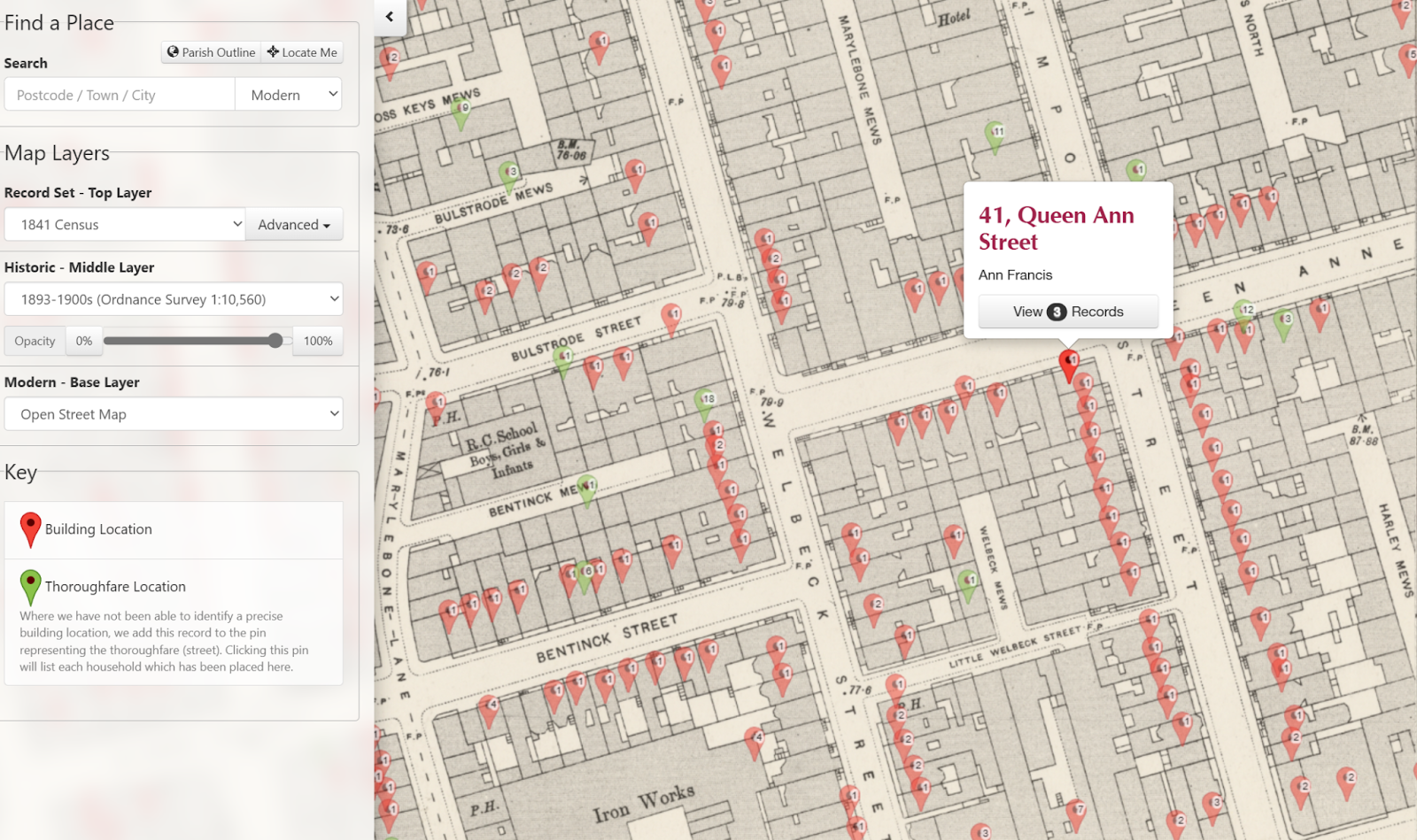
TheGenealogist Unveils 1841 Census on its Innovative Map Explorer

Leading genealogy research website TheGenealogist has announced the integration of the 1841 census into its cutting-edge MapExplorerTM tool. This significant addition allows family historians and researchers to delve deeper into their ancestral past with unprecedented geographical context.


[TheGenealogist’s MapExplorerTM showing households across the streets of London in 1841]

Key Highlights:

  • The 1841 census, the first modern census of England, Scotland and Wales, is now on TheGenealogist's MapExplorerTM

  • Locate your ancestors to the parish, street or even house they lived in

  • Over 18.4 million individuals are recorded in the 1841 census and you can now explore their neighbourhoods

  • Users can visualise their ancestors' locations on historical maps, providing a unique perspective on family history

Mark Bayley, Head of Online Development at TheGenealogist, stated, "We're proud to announce the completion of our project to "map the census". Never before could you pin down your ancestors through each year, from 1841 all the way to the 1939 register. This visual approach to genealogy brings the past to life in ways never before possible."


Found in these records is Surgeon Nurse Eliza Roberts, the forgotten hero of the Crimea, read her story here: https://www.thegenealogist.co.uk/featuredarticles/2024/eliza-roberts-a-forgotten-pioneer-in-nursing-7666/


To celebrate this release, for a limited time you can claim a Diamond Subscription for just £99.45, a saving of £40. You can claim this offer here: 

https://www.thegenealogist.co.uk/affiliate/?affid=lzupkh&page=2746 


Offer expires 30th December 2024.

Leave a comment

Where were they in 1851? – Mapping Your Ancestors’ in the Census

For the first time, you can now pin down your ancestors in 1851!


TheGenealogist’s latest release makes it easy to locate an ancestor geographically in the 1851 census. With a choice of historical and modern georeferenced maps, this welcome development makes it simple to explore the place where your ancestors lived and discover their surroundings.


Census records have always been a staple resource for family historians. With the particulars of the street or road name, researchers will often turn to a modern map to see if they can locate where their forebears lived. This, however, can be fraught with difficulties if the road name changed over the years or the area was redeveloped. Thus, TheGenealogist has been working through its census collection, linking the records to the detailed map collections on its Map Explorer™. 
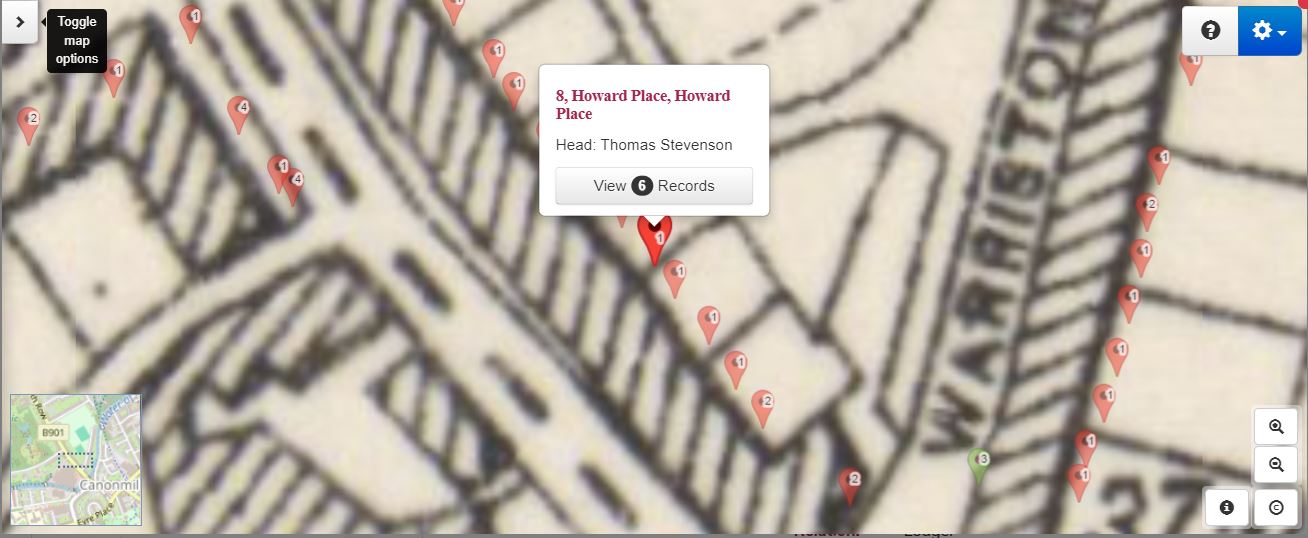

The 1851 Census of Edinburgh linked to Map Explorer™ locating Howard Place, the family home of novelist Robert Louis Stevenson

  • The 1851 census now joins the ranks of other key censuses (1861, 1871, 1881, 1891, 1901, 1911, and the 1939 Register) already integrated with the innovative Map Explorer™.

  • With just a click of a button, researchers can pin their forebears’ residences down to a parish, street or building and trace the routes they would have taken to visit local shops, pubs, churches, workplaces, and parks.

  • Historical maps reveal the location of major roads and the nearest railway stations, shedding light on how our ancestors would have travelled to other parts of the country to work, visit relatives or their hometowns.


With this latest release, subscribers of TheGenealogist can now explore their ancestors’  neighbourhood in 1851, making it easier to uncover hidden stories and discover connections to family that lived nearby.


For those family historians on the move, TheGenealogist allows you to trace your forebears’ footprints while walking down modern streets using their “Locate me” feature. Imagine retracing your ancestors’ steps and discovering the places that they had frequented! 


When viewing a household record from the 1851 census on TheGenealogist, you’ll now see a map indicating where your ancestor was during the night of the census. Clicking on this map seamlessly loads the location in Map Explorer™, enabling you to explore the area.


Read TheGenealogist’s feature article where the 1851 census locates the Edinburgh house where a famous author was born:

https://www.thegenealogist.co.uk/featuredarticles/2024/a-leading-light-on-the-map-of-the-1851-census-7470/ 


Lifetime Discount Offer!


For a limited time, you can claim a Diamond Subscription to The Genealogist for just £89.95, a saving of £50! You’ll also receive a free Research Pack worth over £60.

To find out more and claim the offer, visit https://www.thegenealogist.co.uk/MGBCEN524

This offer comes with a Lifetime Discount, meaning you’ll pay the same discounted price every time your subscription renews.


This offer expires on 31st July 2024.

This offer includes a free research pack containing the following:-
- Subscription to Discover Your Ancestors Online Magazine (Worth £24.99)
- Researching and Locating Your Ancestors Book by Celia Heritage (Worth £9.95)
- Regional Research Guidebook by Andrew Chapman (Worth £9.95)
- Family Tree Chart (Folded)
- Birth Year from Census Date Calculator
- 10 Generation Relationship Calculator
- Ticket to The Family History Show - choose from York 2024, London 2024 or Online 2025

Total Savings: £113.24 - Save Over 55%


About TheGenealogist


TheGenealogist is an award-winning online family history website, who put a wealth of information at the fingertips of family historians. Their approach is to bring hard to use physical records to life online with easy to use interfaces such as their Tithe and newly released Lloyd George Domesday collections. 


TheGenealogist’s innovative SmartSearch technology links records together to help you find your ancestors more easily. TheGenealogist is one of the leading providers of online family history records. Along with the standard Birth, Marriage, Death and Census records, they also have significant collections of Parish and Nonconformist records, PCC Will Records, Irish Records, Military records, Occupations, Newspaper record collections amongst many others.


TheGenealogist uses the latest technology to help you bring your family history to life. Use TheGenealogist to find your ancestors today!

Leave a comment
Back to top