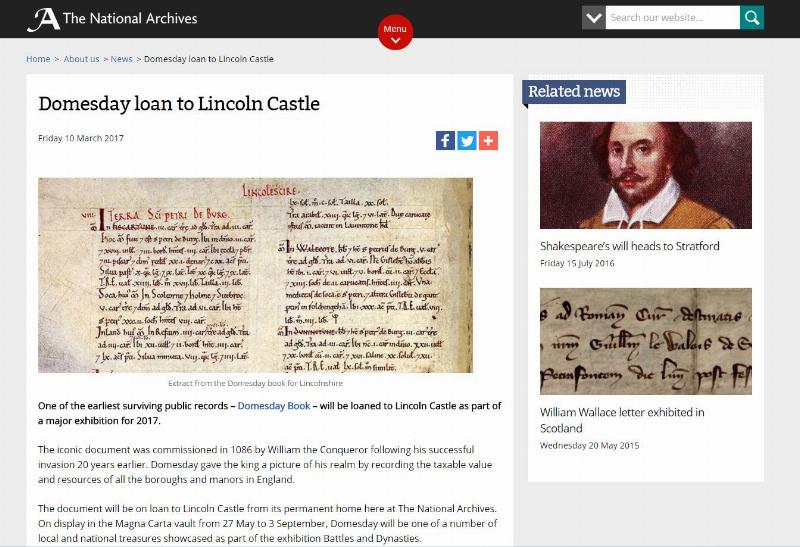
The National Archives has revealed on it website that one of the earliest surviving public records – Domesday Book – is going to be loaned to Lincoln Castle as part of a major exhibition for 2017.
The iconic document that was commissioned in 1086 by William I, the Norman king best known as William the Conqueror, to give him an insight into his new realm by recording the taxable value and resources of all the boroughs and manors in England is to travel North. The document will be on loan to Lincoln Castle from its permanent home at The National Archives in Kew. It will be on display in the Magna Carta vault from 27 May to 3 September along with a number of local and national treasures showcased as part of the exhibition 'Battles and Dynasties'.
Read more on TNA's website:
http://www.nationalarchives.gov.uk/about/news/domesday-loan-to-lincoln-castle/
Well that, sadly, was the last in the series of the UK edition of Who Do You Think You Are?
In Wednesday's show we saw Sophie Raworth discover that green fingers ran in her family. There was also a very interesting insight into the Priestly riots against Nonconformists in Birmingham in 1791. Sadly it had a bearing on her ancestors as they migrated to New York in search of a better life. something that was not to be.
Read this article here to find out more:
https://www.thegenealogist.co.uk/featuredarticles/2017/who-do-you-think-you-are/sophie-raworth-471/
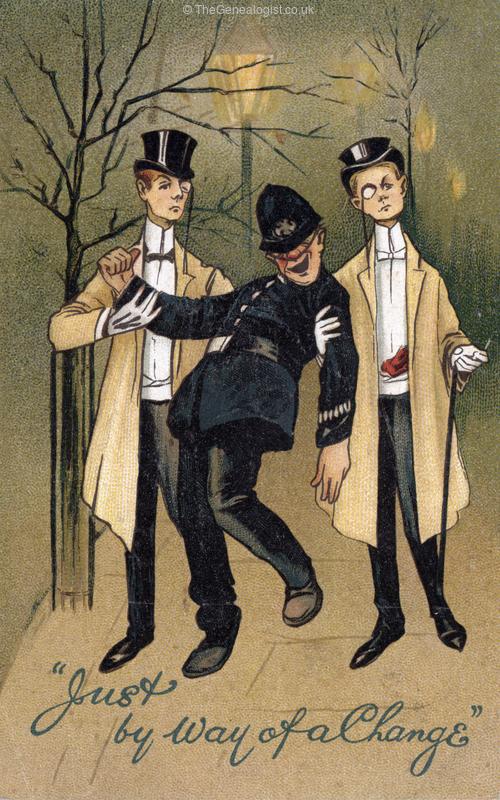
The data subscription site has just launched a new collection of Police Letter Books for Hampshire. This is an intriguing mixture of promotions, retirements, movements, and other observations about Police officers in this county from 1891 to 1911. In amongst its pages you will be able to trace the career of your Hampshire police ancestors as they rise or fall.
These records reveal names and collar numbers of officers promoted, reduced in rank or dismissed from the force for committing various acts of misconduct. The misdemeanors often seem to involve alcohol, ranging from accepting a glass of beer to being drunk on duty. For those more competent officers who were commended for their actions in the pages of these documents, you can read the actions that had been seen as deserving of inclusion in the Letter Books.
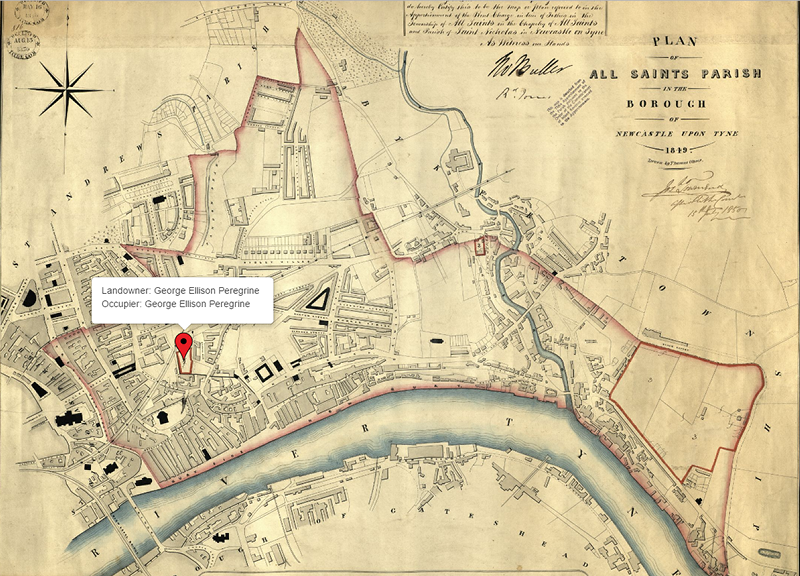
In addition, TheGenealogist has released the Colour Tithe Maps for Northumberland. These maps join the previously released greyscale maps for the majority of the country that are already published on TheGenealogist.
Contains over 600 colour maps, linking to over 62,000 tithe records for this county
These maps are a fantastic resource that enable you to see where your ancestors owned or occupied land in Northumberland
The only online National collection of tithe records and maps
Tithe map of All Saints, Newcastle Upon Tyne, Northumberland on TheGenealogist
The searchable schedules, or apportionment books, contain detailed information on land use and these are linked to the maps on TheGenealogist. Clicking through from the transcript to a map will jump straight to the plot for an individual and can reveal buildings, fields, houses, rivers, lakes, woods and also cover villages, towns and cities.
A case study using one of the new record sets
The Ups and Down of a life on the beat
The latest release of Police Letter Books for Hampshire is an eclectic mix of details of promotions and removals of officers (postings from one place to another), as well as recording such things as additional pay and a number of disciplinary matters that were handed out to the policemen of the Hampshire County Constabulary.
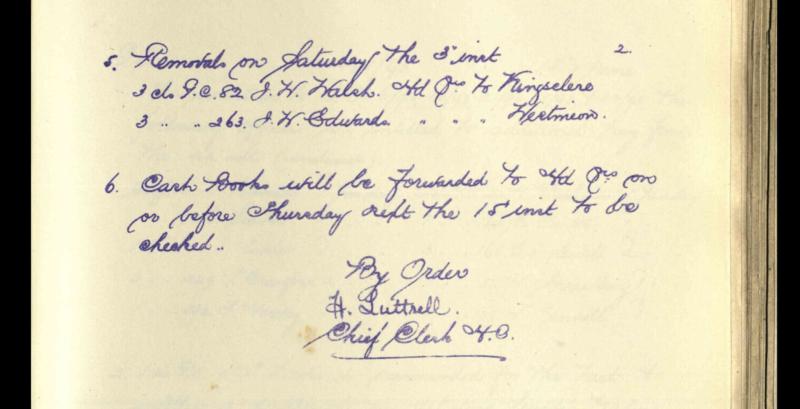
If we search for one late Victorian police officer in the records, named John William Walsh, we can see that P.C. 82 J W Walsh had set out on his employment in the force around 1893. On the 12th June of that year, our 3rd class Police Constable appears first in the Letter Books when he was being sent from headquarters to serve at Kingsclere Police station. As this officer appears no less than nineteen times in the records between 1893 and 1911, we can see that he was a career policeman having probably set his sights on progressing through the ranks. By the end of that same year, on the 8th November 1893, he had been transferred to Totton and promoted to 2nd Class Constable.
So far so good for John Walsh. In 1898 he had made 1st Class Constable and then the job took him to Brockenhurst.
January 1900 sees a blip in his job prospects when he failed his Sergeant's exam, which is duly recorded in the records - but he bounces back a few months later. By the 18th June 1900, when he gets his coveted promotion to Sergeant and is ‘removed’ to Petersfield the same day, we now see that he has been allocated collar number 14. He crops up in the Police Letter Books in a note of an entitlement to extra pay for 13 days in 1905 and then in 1906 saw him reach the pinnacle of his career as he is promoted to Inspector!
What could possibly go wrong?
These new records on TheGenealogist show that, conversely, 1906 was also the worst year for John Walsh’s path up the ranks of the Hampshire County Constabulary. Promoted to Inspector in January 1906; in October he was on the way back down!
18th October 1906 reduced in rank
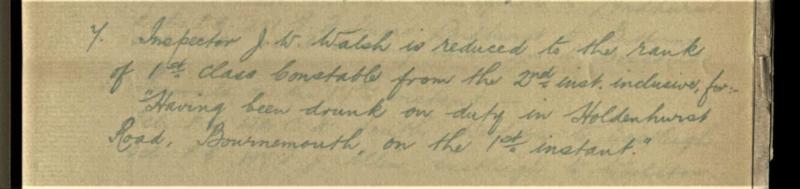
The Police Letter book for the 18th October 1906 sadly reveals that our Inspector, of nine months, was to be reduced in ranks to that of a 1st Class Constable. This must have been devastating for him and his family as he was not just going down one rank, to Sergeant, but back to where he had been eight years before. His offence: being drunk while on duty in Holdenhurst Road, Bournemouth.
A lesser man may have considered his position in the police, but not John Walsh. From the records we find the newly numbered P.C.165 removed from Bournemouth to Farringdon on the same day that he had been busted down in rank. A year later, in 1907, and he has been promoted to Sergeant for the second time in his police career. He is posted to Basingstoke with this rank with yet another change in collar number to 35. It was on the 22nd November 1911 that we see he had climbed further still. It was not quite to the rank that he had lost in 1906, but J Walsh was now a Sergeant Major in the force and was removed to Winchester.
Using these new records on TheGenealogist has enabled us to follow the ups and downs of one particular police officer who, like many of his colleagues, came a cropper through partiality to a drink. If you have Policeman ancestors from Hampshire then search this collection to find interesting mentions of them as they are removed to new stations across the county, are commended for catching thieves, receive promotions, or are sometimes disciplined for their actions.
See more at:
https://www.thegenealogist.co.uk/featuredarticles/2017/police-letter-books-466/
The Genealogist has added to the millions of its UK Parish Records collection with over 282,000 new records from Essex, Cumberland and Norfolk making it easier to find your ancestors’ baptisms, marriages and burials in these fully searchable records covering ancient parishes. Some of the records go back as far as 1672.
Also released are another 43,000 new war memorial records.
The new release of War Memorial records means there are now over 350,0
00 searchable records. This latest release includes war memorials from London, along with further English counties includingCumbria, Berkshire, Warwickshire and Suffolk. The collection also stretches across the globe to encompass new War Memorials situated in Perth, Australia and the Province of Saskatchewan in Canada. Fully searchable by name, researchers can read transcriptions and see images of the dedications that commemorate soldiers who have fallen in the Boer War, WW1 and various other conflicts.
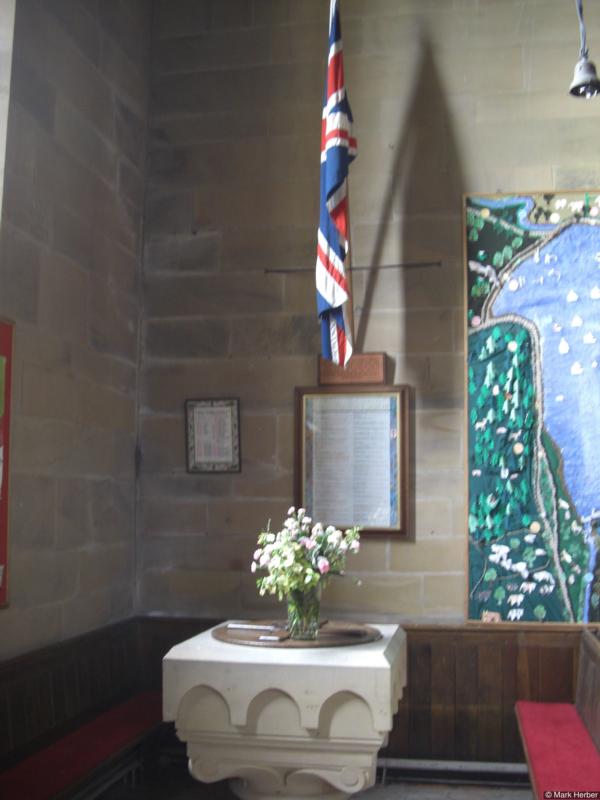
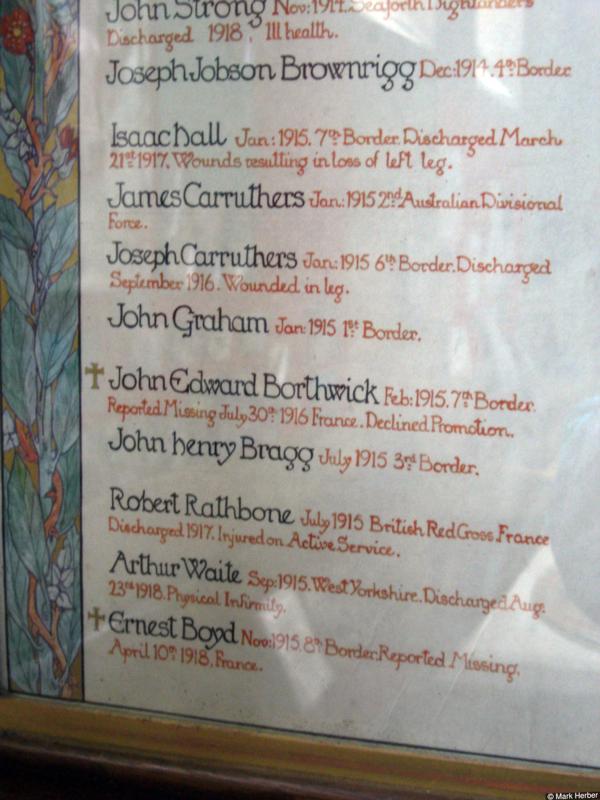
In amongst these newly published War Memorial records are those from St John’s Church in Bassenthwaite, Cumbria. This is a fascinating WW1 roll with men who died or served and includes information such as that for Louis Willis Bell who died in Rouen as a result of poison gassing. Another notable entry is that for Isaac Hall. This soldier enlisted in January 1915 in 7th Border Regiment and was discharged on the 21st March 1917, because of wounds resulting in the loss of his left leg.
Example of Parish Records on TheGenealogist:
Parish Records can sometimes unearth fascinating stories
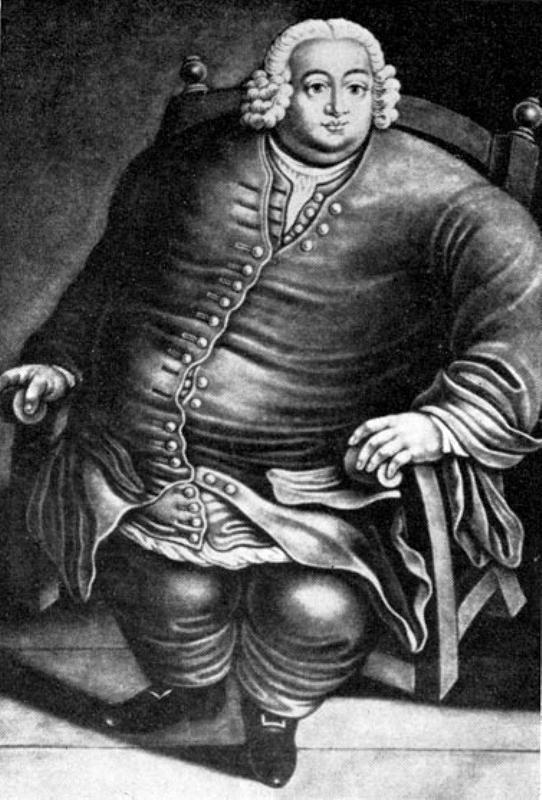
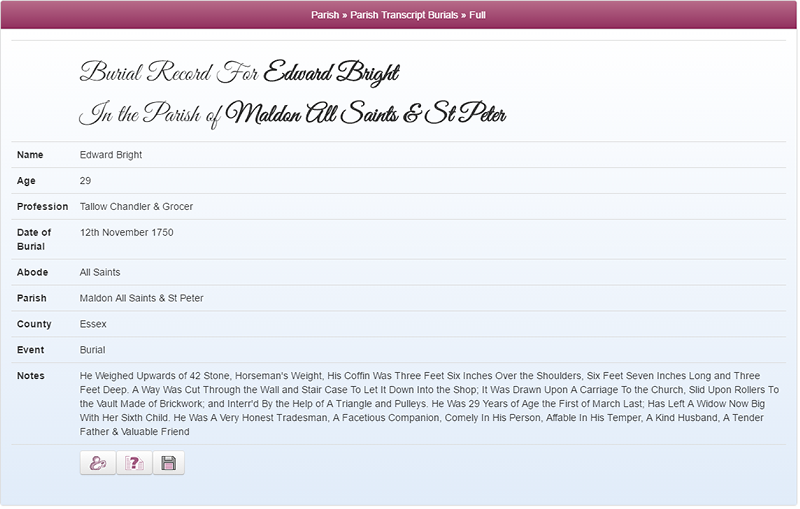
We are all aware that parish records give us those all important dates and names for our ancestors - but in some cases they reveal interesting stories as well. When a vicar, or parish clerk, feels the person they are entering in the register needs an extra explanation, over and above the date and name of the person, then some fascinating historical details can emerge for researchers to read.As an excellent example of this we can look in the parish records for All Saints Church, in Maldon, Essex. Here we find the burial of one Edward Bright in the year 1750. Edward, a Tallow Chandler and Grocer, who died when he was in his late twenties, had an unusual claim to fame.The entry in the parish register on TheGenealogist reveals that he was an extremely large man, weighing 42 stone (588 pounds) and was in fact believed to be the fattest man in England at the time.
Edward Bright by David Ogborne http://www.itsaboutmaldon.co.uk/edwardbright/) [Public domain], via Wikimedia Commons
The notes for his burial on the 12 November 1750 in the parish register explain that Edward had to be buried in a special coffin as he was so large. To remove the casket from his room above his shop, special provisions were needed requiring structural modifications to the wall and stairs to aid his final journey to All Saints. Having arrived at church on a carriage, more unusual procedures were used to get the deceased to his final resting place. Edward’s coffin would have been far too heavy to be borne by pallbearers up the aisle to rest before the congregation during the funeral service. Also it would have severely taxed the muscles of those men who would have normally lowered it manually into the grave. The logistics, in this case, needed rollers to be used to slide the coffin up to a brickwork vault and then a triangle and pulleys were used to lower poor Edward into his grave.The parish register entry did, however, not just dwell on the problems of burying a man of such large proportions. It went on to also record a number of positive attributes that Edward Bright had - so giving us a picture of the man that he was. We can see that he was well thought of by the vicar and community of this 18th century Essex parish. The register tells us that he was: “... A Very Honest Tradesman.A Facetious Companion, Comely In His Person, Affable In His Temper, A Kind Husband, A Tender Father & Valuable Friend.”
Now that the Christmas break is out of the way, the BBC are bringing back the 13th series of Who Do You Think You Are? on Wednesday 25th January.
In this second half of the series, that has been split into two for the first time, we kick off with the world famous British actor: Sir Ian Mckellen.
Read this article on Sir Ian's roots - but beware that it contains spoilers, if you read this before it is broadcast or you haven't seen the programme:
https://www.thegenealogist.co.uk/featuredarticles/2017/who-do-you-think-you-are/sir-ian-mckellen-420/
Sir Ian's edition of Who Do You Think You Are? is broadcast on BBC 1 Wednesday 25th January at 8 pm.
By Gage Skidmore (Ian McKellen) [CC BY-SA 2.0 (http://creativecommons.org/licenses/by-sa/2.0)], via Wikimedia Commons
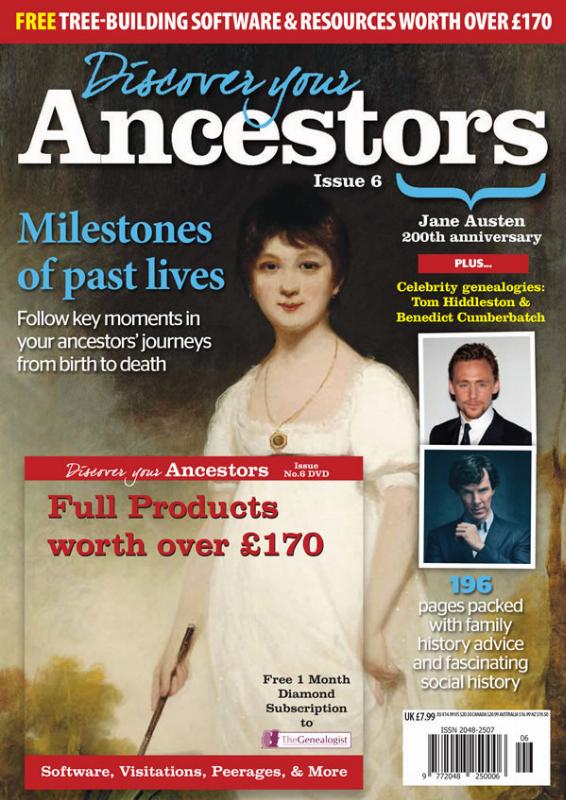
Here is some great news - the wonderful Discover Your Ancestors Bookazine Issue 6 is now available from S&N Genealogy Supplies
This 196 page bookazine contains new in-depth articles, research advice, social history, 'how to' features, case studies, places in focus, and much more! It is ideal for both experienced researchers and those just starting out.
Fascinating features about life in the past
Different types of records explored
Jane Austen: 200th Anniversary
Milestones of past lives: Follow key moments in your ancestors' journeys from birth to death
Celebrity genealogies: Tom Hiddleston & Benedict Cumberbatch
and much more!
Also included is a FREE Cover DVD with over £170 worth of resources! Including:
1 Month Diamond Subscription to TheGenealogist
3 Month Subscription to Discover Your Ancestors Online Periodical
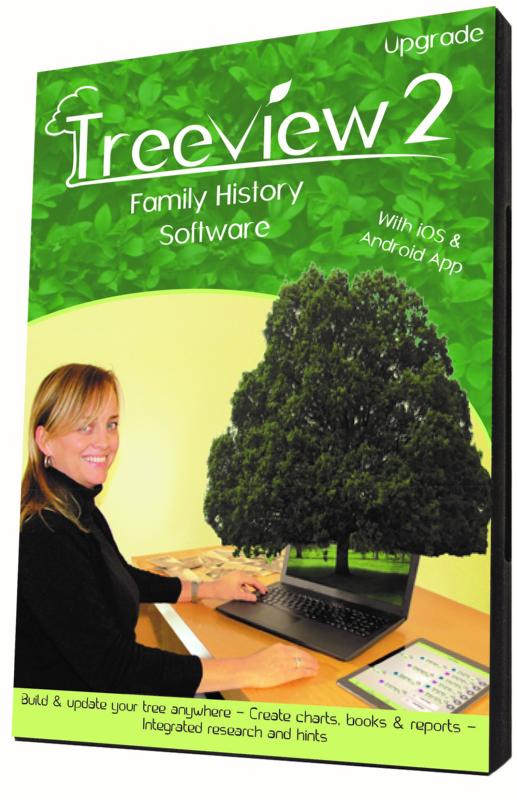
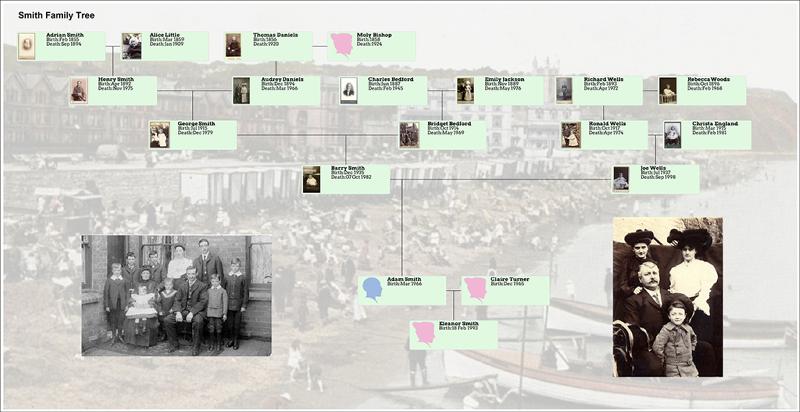
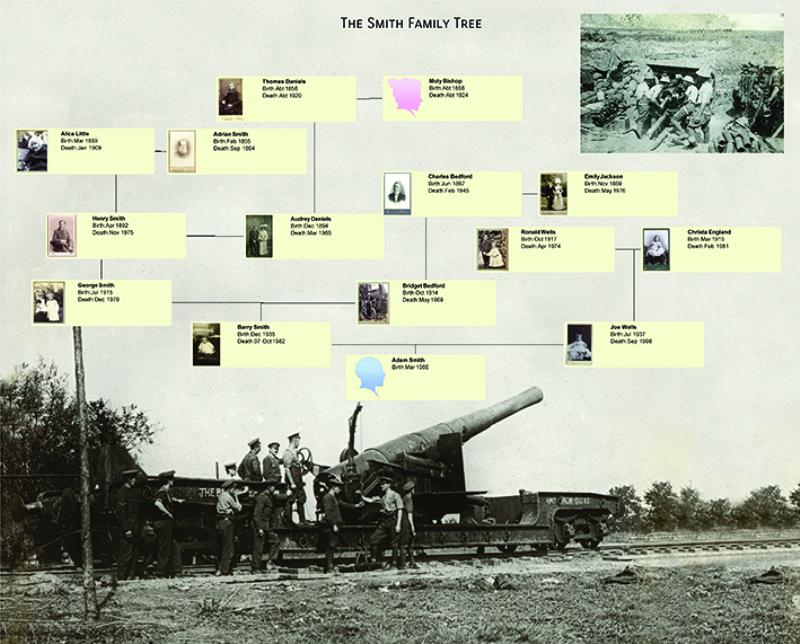
Leading family history publisher S&N Genealogy Supplies have just released TreeView 2, the next version of their popular family history software package specially designed for U.K. family historians.
TreeView stores your family tree on your PC or Mac with the option to easily sync your tree with TreeView.co.uk and its free iOS and Android app, allowing you to keep your family history at your fingertips. Privacy options for your online tree allow you to retain complete control over your research.
TreeView has many powerful features including:
● Sync your tree between the software and all of your mobile devices.
● Display your tree in a variety of different ways including pedigree, family, ancestors, descendants, hourglass, fan and even a full tree view.
● Create beautiful charts and detailed reports in seconds.
● Attach facts, notes, images, addresses, sources and citations to your ancestors.
● View your entire tree on screen, or zoom in to a single ancestor.
● Quickly discover how people in your tree are related using the relationship calculator.
● Identify anomalies in your data with the problem finder.
● Map out your ancestors lives with map view.
● Import or export your family tree using the GEDCOM standard.
Powerful New Features in Version 2
● Linked charting
● Click to focus
● Extra charting features
● 5 new customisable reports types
● Enhanced individual report
● Drag and drop mapping
● Improved search
The new linked charting feature is a great time saver - when you reopen a chart you will be given the option to update it to include any new changes that you have made, such as date or place changes to events.
Whilst using the Tree Views you can click to focus on any person to shift the emphasis on the tree displayed. The person chosen will then become the main focal point of the page.
As well as customising the types of charts, text size, background colours and images, extra charting features have been added so you can now customise the font and colour of the text, along with the colour of the boxes, borders and connections.
Adding to the original report facilities (Individual, Family & Narrative reports), TreeView now comes with a range of new customisable report types, including Address List, Birthday/Anniversary List, Missing Information Report, Descendant Report, printer-friendly Pedigree Chart and a handy blank Pedigree Chart to fill in when out and about researching. All of these reports can be exported in PDF or RTF formats.
The individual report (Which outputs all the details about a person) now supports multiple individuals, so you can select one person and add ancestors, descendants, both or even select your own list of people to include.
The new drag and drop mapping feature allows you to pinpoint an exact place on a map where an event occurred. Co-ordinates for the places you tag are saved and can be exported in GEDCOM files.
The improved search enables you to look for common attributes among your ancestors. You can now search your entire database using keywords, for example “Baker” would find the word in a name, fact, note, etc.
TreeView 2 is a powerful and easy to use family tree program. You can sync to the cloud and your mobile devices. TreeView’s privacy options allow you to keep full control of your data when storing your tree in the cloud.
TreeView 2 Premium Edition (£39.95) - Includes:
○ Full TreeView 2 program
○ Quick Start Guide
○ 4 Month Diamond Subscription to TheGenealogist.co.uk (Worth £59.95!)
○ Cassell's Gazetteer of Great Britain & Ireland 1893 (Worth £16.95!)
○ Imperial Dictionary of Universal Biography (Worth £16.95!)
○ English, Welsh & Scottish Landowners 1873 (Worth £36.90!)
○ Irish Landowners 1876 (Worth £12.95!)
Upgrade to TreeView 2 today for only £14.95
Go to TreeView.co.uk to find out more.
The fantastic online periodical that is a must read for anyone researching their family history is out now. In this month's edition:
The tale of the mail: Harry Cunningham investigates how Britain’s Post Office has been operating for over 500 years
First-class appearance: Jayne Shrimpton investigates the uniforms our postal worker ancestors might have worn
‘For the love of money is the root of all kinds of evil’: Nick Thorne investigates the story of the Reverend Vyvyan Moyle and his temptations of the monetary kind
Learning to walk: Sharon Brookshaw looks at how our forebears took their first steps, epitomising changing attitudes to childcare down the centuries
Great Uncle Mozart: David Lewiston Sharpe looks at the lineages of learning that connect generations of students and teachers
History in the details: Jayne Shrimpton on waistcoats
Regulars: Region: Portsmouth / News & Events / Books / Classifieds
TheGenealogist has made millions of new Hampshire Parish Records available on its site.
Released in partnership with the Hampshire Genealogical Society there are over 2.1 million new fully searchable records of individuals released online for the first time
With these records those searching for ancestors from Hampshire can discover almost 1.8 million people recorded within the baptisms from this area in the south of England as far back as 1538 up to 1751
Family researchers can also discover the details of over 212,000 individuals from marriages between 1538 and 1753 and nearly 143,800 people listed in the burials of Hampshire from 1838 to 1865
Hampshire Genealogical Society worked with TheGenealogist to publish their records online, making 2,135,878 individuals from baptism, marriage and burial records fully searchable. Dolina Clarke, Chairman of Hampshire Genealogical Society said:
“The Hampshire Genealogical Society have decided to put the remaining data from their parish register indexes for Hampshire, which are not already on line, with FHS-Online and TheGenealogist (S & N). We looked at various different online sites and felt that S & N were able to offer us a very fair deal. Furthermore they are a British company with whom we have had a very good relationship for over 20 years.”
Dolina Clarke, Chairman HGS www.hgs-familyhistory.com
Mark Bayley, Head of Online Development at TheGenealogist, welcomed Hampshire Genealogical Society to the growing number family history societies on both TheGenealogist and FHS-Online saying: “We’re delighted that HGS chose to publish their records through TheGenealogist and FHS-Online. This release adds to the ever expanding collection of parish records on both websites. These partnerships help societies boost their funds whilst bringing their records to a much wider audience, through online publication.”
This release joins TheGenealogist’s already published Hampshire parish records, sourced from the Phillimore Registers, and soon we will also be adding further transcriptions that will fill in any gaps to provide an even more comprehensive coverage of this important county.
If your society is interested in publishing records online, please contact Mark Bayley on 01722 717002 or see fhs-online.co.uk/about.php
Example: The last Briton to die in a duel on English soil.
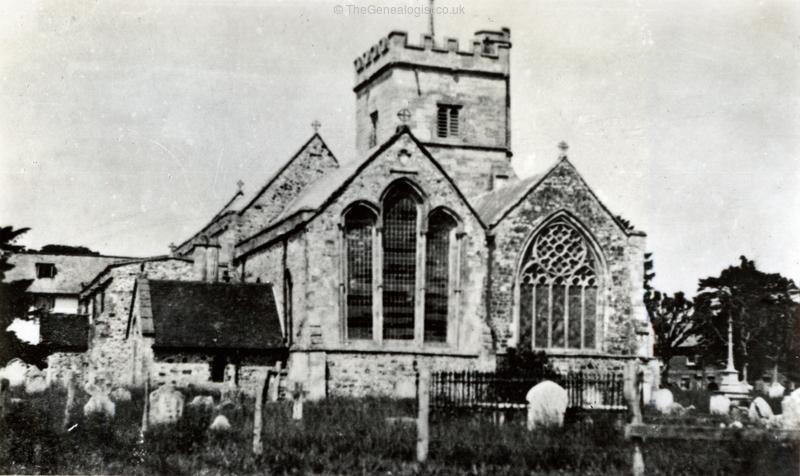
James Alexander Seton was the last British person to be killed in a duel on English soil and he is buried in his family’s vault at St Mary’s Fordingbridge, Hampshire.
St Mary’s, Fordingbridge, Hampshire from the Image Archive on TheGenealogist.
During the early 1840s James Seton, and his wife Susannah, rented some rooms in Southsea on the outskirts of Portsmouth, Hampshire. Seton was a man of means, inheriting wealth, and so had no need to work. The son of a Colonel, he had spent a brief spell in the Army as a junior cavalry officer though his short career never found him being promoted any higher than the rank of cornet. The Setons were of Scottish ancestry, their forebears being descended from the Earls of Dunfermline and Seton’s grandfather was Vice-Admiral James Seton, governor of St Vincent in the Caribbean.
In May 1845 James Seton met Isabella Hawkey, whom he set about pursuing even though he was a married man. She was the wife of Lieutenant Henry Hawkey, an officer in the Royal Marines. When the coast was clear, and her husband was away, Seton began paying visits to Isabella at her lodgings bearing gifts. Lt. Hawkey began to hear the rumours of this and forbade his wife from seeing Seton again. On 19 May 1845, however, there was a ball held in the King's Rooms, Southsea, which the Hawkeys as well as James Seton attended. When Isabella danced with Seton this caused a quarrel in which Lt. Hawkey called Seton a "blaggard and a scoundrel". Having been insulted by this, Seton decided to challenge the Royal Marine Officer to a duel. The next evening, on the beach at Browndown near Gosport and after the seconds had measured out fifteen paces, the duelists took their pistols and fired. James Seton's shot missed his opponent; Henry Hawkey's pistol was half-cocked and failed to fire. Under the rules of dueling, that could have been an honourable end to it but Lieutenant Hawkey insisted on a second exchange of shots and this time Seton fell when he was struck by a bullet entering his lower abdomen.
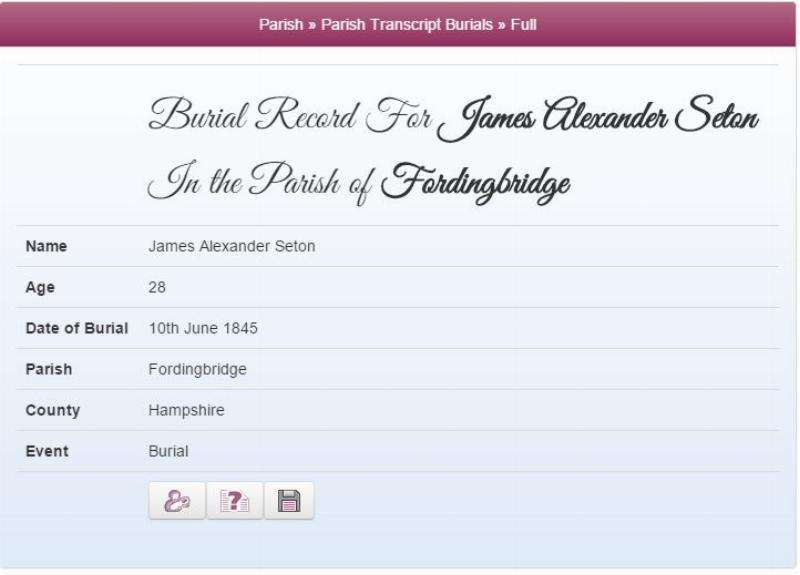
Suffering from his wounds, the wounded man was taken by boat to Portsmouth where he was operated on by the eminent London surgeon Robert Liston. The surgery at first appeared to go well, but then infection set in and Seton quickly went downhill. He died of his injuries on 2nd June 1845 and was buried eight days later. His funeral procession through the town saw most of the shops closing in respect and he was laid to rest in a tomb outside the east front of the church next to his father. A search finds his burial on the 10th June 1845 in the Hampshire records on TheGenealogist.
Well that was a great first programme in the UK series of Who Do You Think You Are?
East Ender Danny Dyer, who plays the landlord of the Queen Vic in the BBC's Eastenders , discovered he was descended from Thomas Cromwell and Royalty including Edward III and there up to William the Conqueror. From the early research, into his more recent ancestors, it was not looking very positive with tales of relatives in and out of the workhouse and other hardships. Then suddenly, with the discovery of a gateway ancestor, the actor found himself related to nobility and finally the ultimate top of the social pile - the King of England!
This article on TheGenealogist got it right. See:
https://www.thegenealogist.co.uk/featuredarticles/2016/who-do-you-think-you-are/danny-dyers-cockney-and-royal-roots-371/



 00 searchable records. This latest release includes war memorials from London, along with further English counties including Cumbria, Berkshire, Warwickshire and Suffolk. The collection also stretches across the globe to encompass new War Memorials situated in Perth, Australia and the Province of Saskatchewan in Canada. Fully searchable by name, researchers can read transcriptions and see images of the dedications that commemorate soldiers who have fallen in the Boer War, WW1 and various other conflicts.
 In amongst these newly published War Memorial records are those from St John’s Church in Bassenthwaite, Cumbria. This is a fascinating WW1 roll with men who died or served and includes information such as that for Louis Willis Bell who died in Rouen as a result of poison gassing. Another notable entry is that for Isaac Hall. This soldier enlisted in January 1915 in 7th Border Regiment and was discharged on the 21st March 1917, because of wounds resulting in the loss of his left leg.